
Health Insurance in Switzerland - What They Don't Tell You
Mandatory health insurance (LAMal), deductibles, premiums by canton, supplemental insurance. Practical guide with real costs and strategies to save CHF 2,000+/year on your insurance.
Health Insurance in Switzerland: What They Don't Tell You
"Your net salary will be approximately CHF 5,800 per month."
When Emma calculated her budget for settling in Zurich, she was delighted. CHF 5,800 net, minus CHF 1,900 rent, leaves CHF 3,900 to live on—more than comfortable.
First month in Switzerland, she receives her health insurance bill: CHF 450. "Wait, wasn't that deducted from my salary?" No. In Switzerland, health insurance is mandatory but paid separately. Emma's real budget: CHF 3,450, not CHF 3,900.
This surprise awaits the majority of newcomers. Swiss health insurance works differently from anything you probably know. But once you understand the system, you can save CHF 2,000-3,000 annually with the right strategies. This guide explains exactly how.
Key figure: According to the Federal Office of Public Health, health insurance premiums range from CHF 280 to CHF 580 per month for an adult depending on the canton—that's up to CHF 3,600 annual difference simply by living elsewhere (source: OFSP).
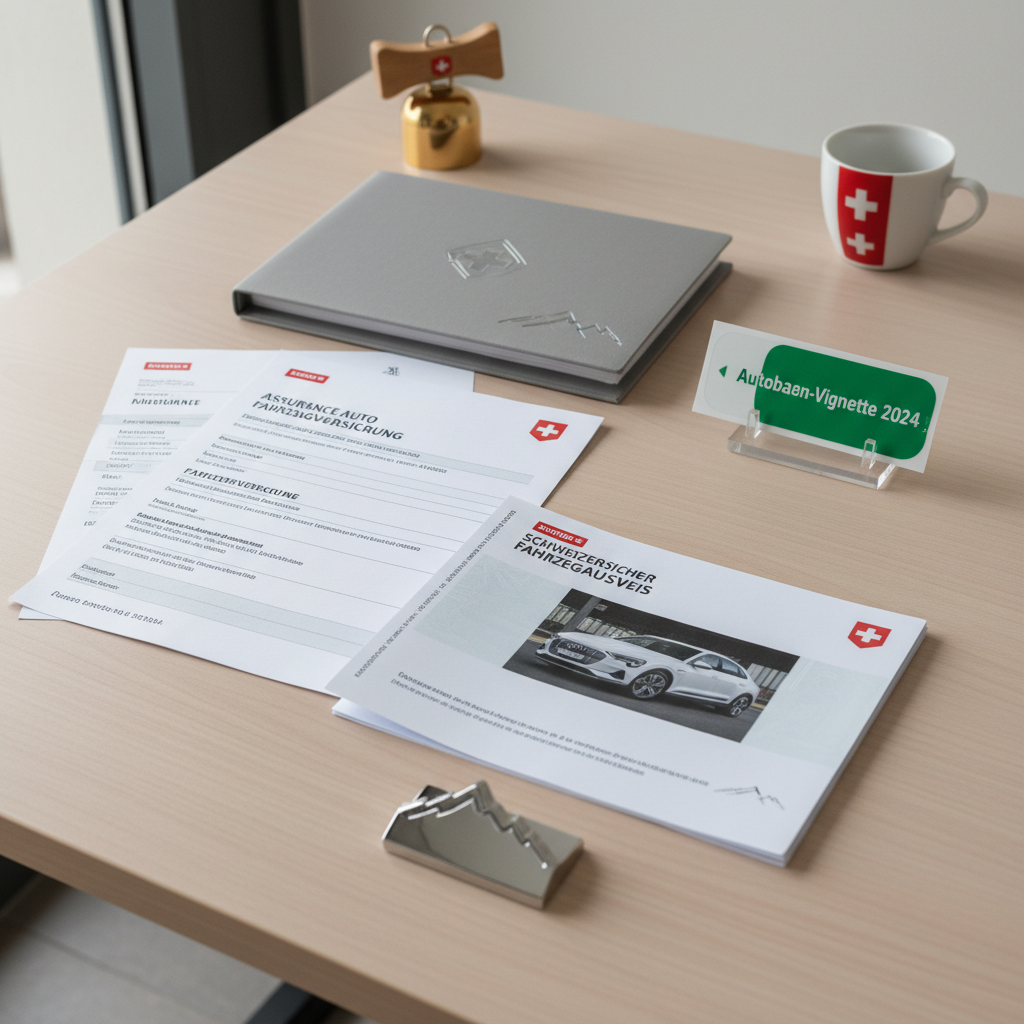 Photo by Leeloo The First on Pexels - Swiss health insurance requires active planning
LAMal: The Insurance You Must Have
The 3-Month Countdown
Imagine: you arrive in Switzerland on Monday. Tuesday, you register at the commune. From that Tuesday, an invisible timer starts: 90 days to choose your health insurance.
Week 1: You set up your apartment, start your new job, discover your neighborhood. Insurance? "I have three months, no rush."
Week 8: Still not done. You receive a reminder from the canton. "Ok, I'll take care of it next weekend."
Day 91: Oops. You receive an official letter. The canton has assigned you Helsana with the lowest deductible (CHF 300) and the standard model (the most expensive). Premium: CHF 580/month. You could have had Assura with a CHF 2,500 deductible at CHF 320/month. Difference: CHF 3,120 per year.
Crucial message: The three months pass quickly when you settle in. Make it a priority week 1-2, not week 12.
How It Really Works
LAMal guarantees access to medical care for all Swiss residents. The system is based on two unique principles:
Principle 1: Benefits are identical everywhere. Whether you pay CHF 280 at Assura in Appenzell or CHF 580 at Helsana in Geneva, you are covered exactly the same. Basic LAMal is federally standardized—doctors, hospitals, medications, everything is identical. You just pay for the brand and administration, not for better benefits.
Principle 2: You pay directly, not through your salary. Each month, you receive an invoice from your insurer. You must pay it yourself. It is not automatically deducted as in France or Germany. Total personal responsibility.
This peculiarity is surprising, but it has a logic: by paying directly, you are more aware of the real cost of your health. Theoretically, it encourages accountability. Practically, it simply increases your monthly mental load.
The Franchise Game: Medical Poker
The franchise is your starting bet in the annual medical poker game. You're betting on your health.
The Rules of the Game
Each year, you choose how much you are willing to pay out of pocket before the insurance kicks in. Options: CHF 300, 500, 1,000, 1,500, 2,000, or 2,500.
The higher your franchise, the less you pay in monthly premiums. But if you get sick, you pay more out of pocket. It's a bet on your annual health.
Marc, 29 Years Old: The Gambler
Marc runs 3 times a week, eats healthily, and hasn't been sick in 4 years. He chooses a CHF 2,500 franchise.
Monthly premium: CHF 320 (instead of CHF 450 with a CHF 300 franchise) Savings: CHF 130/month = CHF 1,560/year
In 2025, Marc had two medical consultations (CHF 350 total). He paid everything out of pocket (under his franchise). Net result: CHF 1,560 saved - CHF 350 paid = CHF 1,210 in his pocket.
The bet worked.
Sophie, 29 Years Old: The Cautious One
Sophie, the same age as Marc, chose a CHF 300 franchise as a precaution.
Monthly premium: CHF 450 Total annual paid: CHF 5,400
In 2025, chronic back problem. Physiotherapist, tests, medication: CHF 3,200 in costs.
- Franchise: CHF 300
- 10% co-payment: CHF 290
Total paid: CHF 5,400 + 300 + 290 = CHF 5,990
Marc with a CHF 2,500 franchise in the same situation:
- Premiums: CHF 3,840
- Franchise: CHF 2,500
- Co-payment: CHF 70
Total paid: CHF 6,410
Sophie saved CHF 420 thanks to her caution. But in years without problems (80% of the time for thirty-year-olds), Marc wins.
Photo by cottonbro studio on Pexels - Choosing your franchise requires honestly assessing your medical needs
The Magic Formula
Here's how to decide mathematically:
CHF 2,500 franchise profitable if: Annual medical expenses < (CHF 130 × 12) + (CHF 2,500 - CHF 300) Annual medical expenses < CHF 3,760
Simple translation: If you spend less than CHF 3,760 on annual care, the maximum franchise saves you money. Statistically, 65% of 20-40 year olds are in this case.
My personal advice: If you are young, athletic, a non-smoker, without chronic illnesses, and have CHF 2,500 in savings set aside for unforeseen events, take the maximum franchise. Otherwise, be cautious with CHF 1,000-1,500.
Supplemental Insurance: Luxury or Necessity?
Basic health insurance (LAMal) provides adequate care. Supplemental insurance adds comfort and covers what the basic plan excludes. But be careful: it's expensive and not always cost-effective.
Laura and Thomas: Two Opposing Choices
Laura, 34 years old, manager, CHF 110,000/year
She takes:
- Basic LAMal: CHF 380/month
- Private ward: CHF 280/month
- Alternative medicine: CHF 25/month
- Premium dental care: CHF 45/month
Total: CHF 730/month (CHF 8,760/year)
In 2025, Laura is hospitalized for 5 days for a scheduled operation. Private ward activated: single room, head of department, hotel comfort. She greatly values this difficult experience made bearable.
For her, the CHF 280/month supplemental insurance is worth every penny. Psychologically, financially comfortable, she optimizes for comfort, not cost.
Thomas, 34 years old, developer, CHF 85,000/year
He takes:
- Basic LAMal: CHF 320/month (CHF 2,500 deductible, HMO model)
- No supplemental insurance
Total: CHF 320/month (CHF 3,840/year)
Savings vs Laura: CHF 4,920/year. In 5 years, that's CHF 24,600—enough to finance a trip around the world or a real estate down payment.
Thomas bets on his health and accepts the general ward in the hospital if needed (which has never happened in 5 years). His choice reflects his philosophy: optimize costs, accept less comfort.
No choice is "better". It depends on your values, your budget, and your risk tolerance.
Supplemental Insurance That's Worth It
Semi-private ward (CHF 80-150/month): Recommended if you strongly value hospital comfort and have a risk of hospitalization (risky sport, known health problems, stressful profession). Cost-effective from a hospitalization of 3+ days every 5 years.
Dental (CHF 20-60/month): Mainly cost-effective for families with children requiring orthodontics (CHF 5,000-15,000 without insurance). For adults: only if chronic dental problems. The Swiss statistically have excellent teeth—many overestimate their needs.
Alternative medicine (CHF 15-30/month): Only if proven regular use (weekly acupuncture, frequent homeopathy). Generally covers 75% up to CHF 3,000/year. Simple calculation: if you spend less than CHF 1,000/year on alternative medicine, not cost-effective.
Photo par Ivan S sur Pexels - Supplemental insurance adds comfort and options beyond basic coverage
The Trap of Supplemental Insurance
Here's what they don't tell you: supplemental insurance has a medical questionnaire. If you have existing health problems, the insurer can:
- Refuse your application
- Exclude certain benefits
- Apply a surcharge
Julie wanted to take out private ward insurance at 45 years old. The questionnaire reveals her type 2 diabetes. Flat refusal. She should have taken it out at 30 when she was in good health.
Golden rule: If you think you might want supplemental insurance one day, take it out young and in good health. You can always cancel later, but the reverse is difficult or even impossible.
Accidents: Automatic Coverage (Or Almost)
Mandatory Accident Insurance
If you work 8+ hours per week, your employer automatically insures you against:
- Occupational accidents (LAA) - paid 100% by the employer
- Non-occupational accidents (AANP) - paid by you (~1.5% of salary)
This insurance covers skiing accidents, bicycle falls, DIY gone wrong, etc. It's solid: 100% of medical costs + 80% of your salary if you are unable to work + disability pension if permanent consequences.
The Hole in the Net
Julien works 6 hours/week as a student. His employer does NOT provide him with AANP (below the 8-hour threshold). Julien assumes he is covered by his LAMal for accidents.
Ski accident, complex fracture, CHF 8,500 in costs. His LAMal refuses: "Not covered, you have not subscribed to the accident module."
Julien has to pay CHF 8,500 out of his own pocket. If he had added the accident module to his LAMal (CHF 45/month = CHF 540/year), he would have been covered.
Essential check: If you work less than 8 hours/week, explicitly request the accident module in your LAMal. Cost: CHF 40-80/month. It can save you from financial ruin.
Premium Comparison by Canton: Geographical Injustice
LAMal premiums vary from single to double depending on where you live. This variation reflects regional healthcare costs (doctors' salaries, hospital infrastructure, demographics).
The Geneva Paradox
Geneva has the highest premiums in Switzerland (CHF 530-580/month for adults). Why?
Several factors:
- Higher medical salaries (CHF 180,000 average doctor vs CHF 140,000 elsewhere)
- Expensive but excellent Geneva University Hospitals (HUG)
- Aging population (more care)
- Cross-border workers who receive treatment in Switzerland but live in France (imbalance)
But here's the twist: Genevans also earn 15-20% more than the Swiss average. A premium of CHF 580 represents 6.2% of the median Geneva salary (CHF 9,300/month), compared to 7.1% in Appenzell where the premium is CHF 300 but the median salary is CHF 4,200/month.
Relatively, Geneva may not be that expensive.
The Appenzell Deal
Appenzell Innerrhoden has the lowest premiums: CHF 280-320/month. How do they do it?
Tiny canton (16,000 inhabitants), young and active population, only one small hospital, very efficient system. Appenzellers often go to Saint-Gall for complex care. But for 90% of common medical needs, their local system is more than sufficient.
The calculation: Living in Appenzell vs Geneva saves CHF 3,120/year on health insurance alone. Over 20 years, that's CHF 62,400—enough to buy a small car or finance a child's education.
Photo by Tima Miroshnichenko on Pexels - The quality of care remains excellent throughout Switzerland despite premium differences
Insurance Models: Reduce Your Premium
The Standard Model: Maximum Freedom
You go to any doctor, anytime, without constraint. It's total freedom—and also the highest premium.
Who should choose this model:
- You see several specialists regularly
- You want to keep total freedom of choice
- Premium difference doesn't bother you
Cost: Full basic premium (example: CHF 450/month in Zurich)
The Family Doctor Model: The Best Compromise
You choose a family doctor. Every time you have a problem, you go through him first. He refers you to a specialist if necessary.
Savings: 10-15% on your premium (CHF 45-68/month in Zurich = CHF 540-816/year)
Mathilde has this model. Her family doctor is excellent, knows her well, and coordinates all her care. For 95% of her needs, this filter is not a constraint but an advantage—continuity of care, better follow-up. The 5% where she would like to go directly to a specialist? A phone call to her general practitioner is enough for authorization.
Verdict: Best value for money for the majority of people. Real savings without real constraint.
The HMO Model: Maximum Savings
HMO = Health Maintenance Organization. You must go to a specific medical center grouping several doctors.
Savings: 20-25% on your premium (CHF 90-113/month in Zurich = CHF 1,080-1,356/year)
The trade-off: limited choice to the doctors of the HMO center. If you don't like your doctor, you can change, but only among the doctors of the same center.
Patrick has been using this model for 5 years. The Medbase center near his home is modern, well-equipped, and the doctors are competent. He saves CHF 1,200/year which he invests in his 3rd pillar. For him, the constraint is theoretical—in practice, the center satisfies all his needs.
Verdict: Excellent if a good HMO center exists near you. Check the quality of the specific center first before subscribing.
The Telmed Model: Savings vs Constraint
Before each consultation, you must call a medical hotline that advises you and authorizes or does not authorize the consultation.
Savings: 10-15% (CHF 45-68/month)
Honestly? This model frustrates a lot of people. You have a stomach ache at 10 p.m., you must first call a hotline, wait, explain your symptoms to a stranger on the phone, before being authorized to see a doctor.
Sandrine tried this model for 18 months. She saved CHF 900, but abandoned it after three frustrating experiences with the hotline. For her, freedom was worth more than the savings.
Verdict: Only if money is really tight AND you are patient with administrative bureaucracy.
The 2nd Pillar (LPP): Your Retirement, Not Insurance
Technically, the LPP is not "insurance" in the classic sense—it's mandatory retirement savings. But since it is often grouped with insurance in discussions, let's clarify.
What It Really Is
Each month, approximately 7-18% of your salary (depending on age) goes into your personal LPP account. Your employer contributes at least as much. This money is invested and accumulates until your retirement.
At 65, you generally have CHF 400,000-800,000 depending on your career. You choose: lump sum capital, monthly lifetime annuity, or a mix of the two.
The LPP is not a lost expense—it's YOUR money waiting for you in retirement.
The Trick of Withdrawal for Real Estate Purchase
Here's a secret that many don't know: you can withdraw your 2nd pillar to buy your primary residence in Switzerland.
Alexandre, 38, has CHF 140,000 accumulated in his LPP. He wants to buy an apartment for CHF 650,000. With his savings, he has CHF 80,000. He is missing CHF 50,000 to reach the required 20% down payment.
Solution: He withdraws CHF 50,000 from his LPP. The bank accepts his application. He becomes a homeowner.
Impact: His LPP capital at retirement will be reduced (loss of CHF 120,000 in compound interest over 27 years), but he is a homeowner without excessive debt. It's a life-retirement trade-off that many Swiss people make.
Strategies to Save CHF 2,000-3,000/Year
Strategy 1: Rigorous Annual Comparison
Every October, take 30 minutes:
- Go to Priminfo.ch
- Enter your canton, age, current deductible
- Sort by increasing price
- If savings > CHF 50/month, change!
Sarah has been doing this religiously for 5 years. She has changed insurers 3 times. Cumulative savings: CHF 4,200. Time invested: 2.5 hours total. That's CHF 1,680/hour—not bad as an hourly rate.
Strategy 2: Dynamic Deductible
Adapt your deductible to your annual situation.
Young and healthy (25-35 years old): CHF 2,500 deductible Baby project: Switch to CHF 300 the year before/during (maternity = high costs) Scheduled operation: Lower your deductible the previous year Return to good health: Increase back to CHF 2,500
Warning: deductible change possible only once a year, on January 1st. Send your request before the end of November.
Strategy 3: Canton-Premium Arbitrage
If you are hesitating between two cantons for your residence, include the health insurance premium in your calculation.
Example: Zurich vs Appenzell Rhodes-Extérieures
| Critère | Zurich | Appenzell | Différence |
|---|---|---|---|
| Taxes (CHF 100K) | CHF 22,500/year | CHF 18,900/year | +CHF 3,600 Appenzell |
| LAMal Premium | CHF 5,040/year | CHF 3,600/year | +CHF 1,440 Appenzell |
| 3-room rent | CHF 30,000/year | CHF 18,000/year | +CHF 12,000 Appenzell |
| Fixed Total | CHF 57,540 | CHF 40,500 | +CHF 17,040 Appenzell |
But Appenzell also offers far fewer professional opportunities, requires German, and lacks cultural life. Is the saving of CHF 17,040 worth it to you? It's up to you to decide according to your priorities.
Strategy 4: Check Subsidies
If your income is modest, you are automatically entitled to a premium reduction. But some can### Amount of Compensation
If your income is modest, you are automatically entitled to a premium reduction paid by the canton.
Caroline, a family of 4, combined income of CHF 68,000 in Vaud, receives CHF 520/month in cantonal subsidy. Her total family premiums (CHF 1,450/month) are reduced to an effective CHF 930. This aid makes all the difference to their budget.
Important: The subsidy is calculated automatically via your tax return. No special request required in most cantons. But check—some systems have bugs and forget eligible people.
Your 3-Step Action Plan
This Week: Subscribe or Optimize
If you have just arrived: Go to Priminfo.ch, enter your canton, compare insurers, choose a deductible according to your health, subscribe. Total: 45 minutes.
If already insured: Note the date in your calendar for next October "Compare insurances". Every year, systematically. People who do this save CHF 500-1,500/year on average.
This Month: Check Your Coverage
Look at your current insurance policy. What exactly do you have? LAMal alone? Supplementary insurance? Which ones?
Ask yourself: do I really need this private division at CHF 200/month that I have been paying for 3 years without ever being hospitalized? Or: should I add dental insurance before my children need braces?
Optimization = aligning your coverage with your real needs, not theoretical ones.
In Three Months: Evaluate
After 3 months in Switzerland, take stock. Is your premium manageable? Are you satisfied with your insurer (customer service, speed of reimbursements)?
If something is wrong, note it. Change possible on January 1st of the following year with cancellation before the end of November.
Key Points to Remember
Swiss health insurance is mandatory but offers many optimization opportunities for those who understand the system. Three essential principles: Firstly, LAMal benefits are identical everywhere—pay the minimum by systematically comparing on Priminfo.ch every October (potential savings of CHF 500-1,500/year). Secondly, adapt your deductible to your actual health—healthy young people save CHF 1,200-1,560/year with a deductible of CHF 2,500, but it's a gamble that can be expensive in the event of a problem. Thirdly, supplementary insurances are a luxury, not a necessity—subscribe only if there is a real need and always when young/in good health to avoid refusals or exclusions.
Never forget: this premium of CHF 300-580/month is added to your expenses and is not deducted from your salary. Integrate it from the start into your budget to avoid Emma's unpleasant surprise.
Official Resources
- Priminfo.ch - Official FOPH Comparator - Official tool to compare all health insurance premiums (LAMal) by canton and insurer
- FOPH - Federal Office of Public Health - Official information on the Swiss healthcare system
- CH.ch - Insurance Portal - Comprehensive practical guide on your rights and obligations
- Comparis - Independent Comparator - Detailed comparison with user reviews
- Groupe Mutuel - LAMal Guide - Complete documentation from a major insurer
- Assura - FAQ - Frequently asked questions about health insurance
- Insurance Ombudsman - Assistance in case of disputes with your insurer
Related Articles
Calculate your net salary in Switzerland Discover your real salary after all deductions. Important: health insurance is then added and further reduces your available budget by CHF 300-600/month.
Taxes in Switzerland explained The three-level Swiss tax system decoded. Understand why your canton determines 70% of your tax burden and how to optimize legally.
Choosing your canton in Switzerland Health insurance premiums vary by CHF 3,600/year depending on the canton. Include this criterion in your choice of residence to optimize your overall budget.
Tax comparator of the cantons Visualize the combined impact of taxes AND health insurance premiums on your budget depending on the canton. Some cantons with high taxes have low premiums and vice versa.

Share This Article
📖 ShareThis Integration Guide
About ShareThis Inline Share Buttons
Inline Share Buttons can be seamlessly positioned at the top/bottom of your articles or next to products you're selling for easy sharing. Connect your site to the rest of the world by enabling visitors to share your content across 40+ social channels.
Installation Steps
Step 1: Add ShareThis Script to Your Site
Place ShareThis Script inside your website's <head></head> section. This code powers all ShareThis Apps and only needs to be added once per page.
<script type='text/javascript' src='https://platform-api.sharethis.com/js/sharethis.js#property=69624e147512c045298580c6&product=sop' async='async'></script>Step 2: Enable the App
Click Enable App in your ShareThis dashboard to turn this app on for your website. It will only work on pages where the ShareThis script has been added in Step 1.
Step 3: Add the Placement Tag
Add this placement tag wherever you want your share buttons to appear:
<!-- ShareThis BEGIN -->
<div class="sharethis-inline-share-buttons"></div>
<!-- ShareThis END -->
Customization Options
- Smart Share Buttons: ShareThis will automatically select which share buttons to show based on users' preferences
- Alignment: Choose from Left, Right, Center, or Justified
- Color Themes: Social, White, Black, Gray, or Custom colors
- Sizes: Large, Medium, or Small buttons
- Labels: Call to Action, Share Counts, or None
- Corners: Square or Round button shapes
- Languages: Multiple language support available
⚠️ Important Notes
- The ShareThis script must be loaded in the page head for buttons to work
- You can customize button appearance in your ShareThis dashboard
- Enable the app in your dashboard after adding the script
- Share counts require a minimum threshold (default: 10 shares)
Need Help?
Visit the ShareThis Support Center for detailed documentation and troubleshooting guides.
Calculate Your Exact Swiss Salary
Want to know exactly what you'll take home after taxes and social contributions? Our calculator accounts for your canton, family situation, and all deductions.
Try Our Salary Calculator