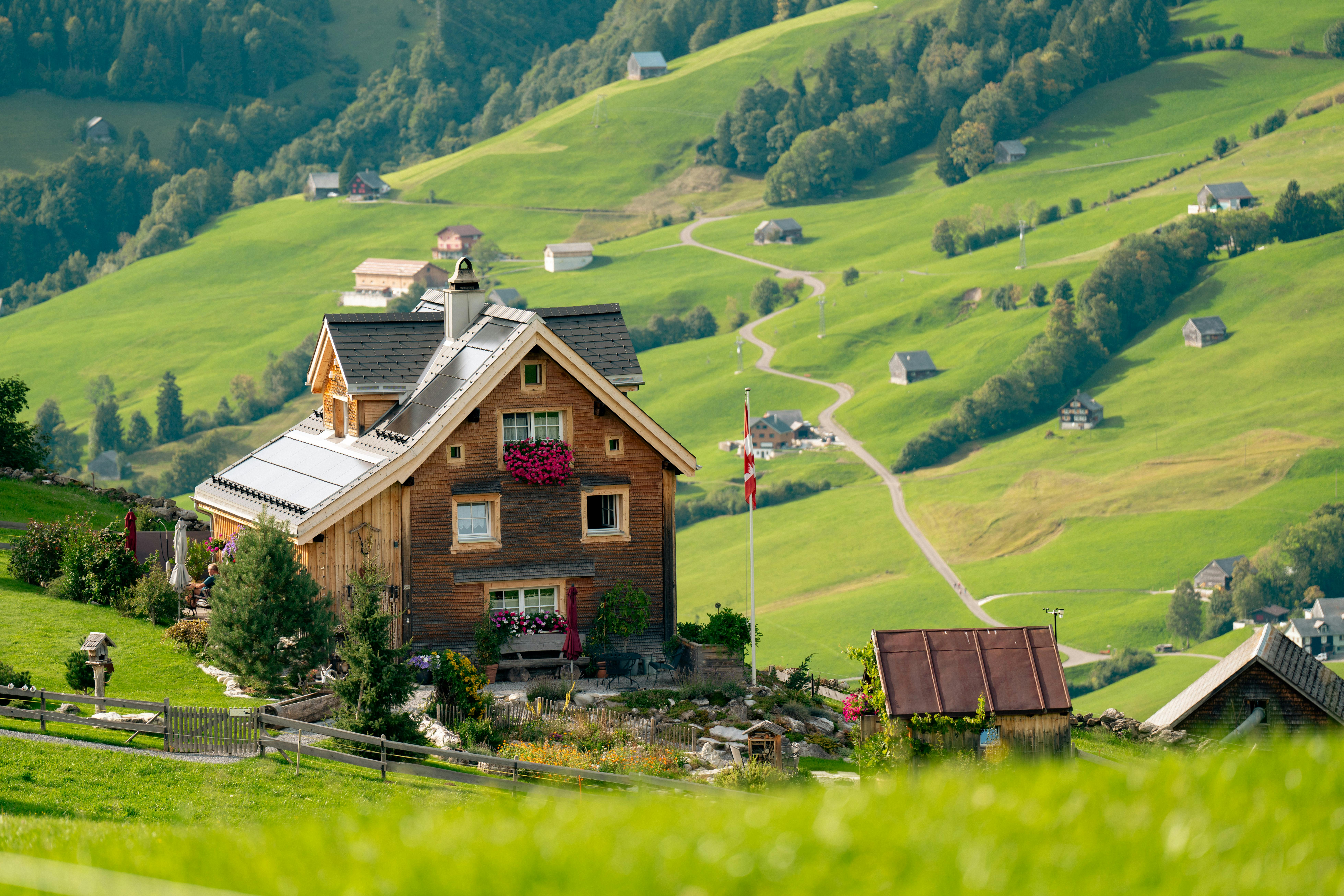
Choosing Your Canton in Switzerland - The Practical Guide 2026
Discover how to choose your canton of residence in Switzerland according to your priorities. Real comparison of costs, taxes, employment, and quality of life.
Choosing Your Canton in Switzerland: The Practical Guide 2026
Marie thought the hardest part would be finding a job in Zurich. Three months after her arrival, she realizes that her real headache is just beginning: which canton to settle in? Geneva close to France? Zurich for the opportunities? Or maybe Zug to optimize her taxes?
Choosing your canton of residence in Switzerland is not just a matter of address on your identity card. It is a decision that will directly impact your wallet (up to CHF 16,000 annual difference in taxes), your daily quality of life, and even your future professional opportunities.
Unlike France where you simply live "near Paris" or "in the South", Switzerland offers you 26 different mini-countries, each with its own tax rules, job market, and culture. This guide helps you navigate this complexity to find the canton that truly matches your life.
Key figure: According to the Federal Statistical Office, 8% of Swiss people change cantons at least once in their professional life, mainly for tax or professional reasons (source: FSO).
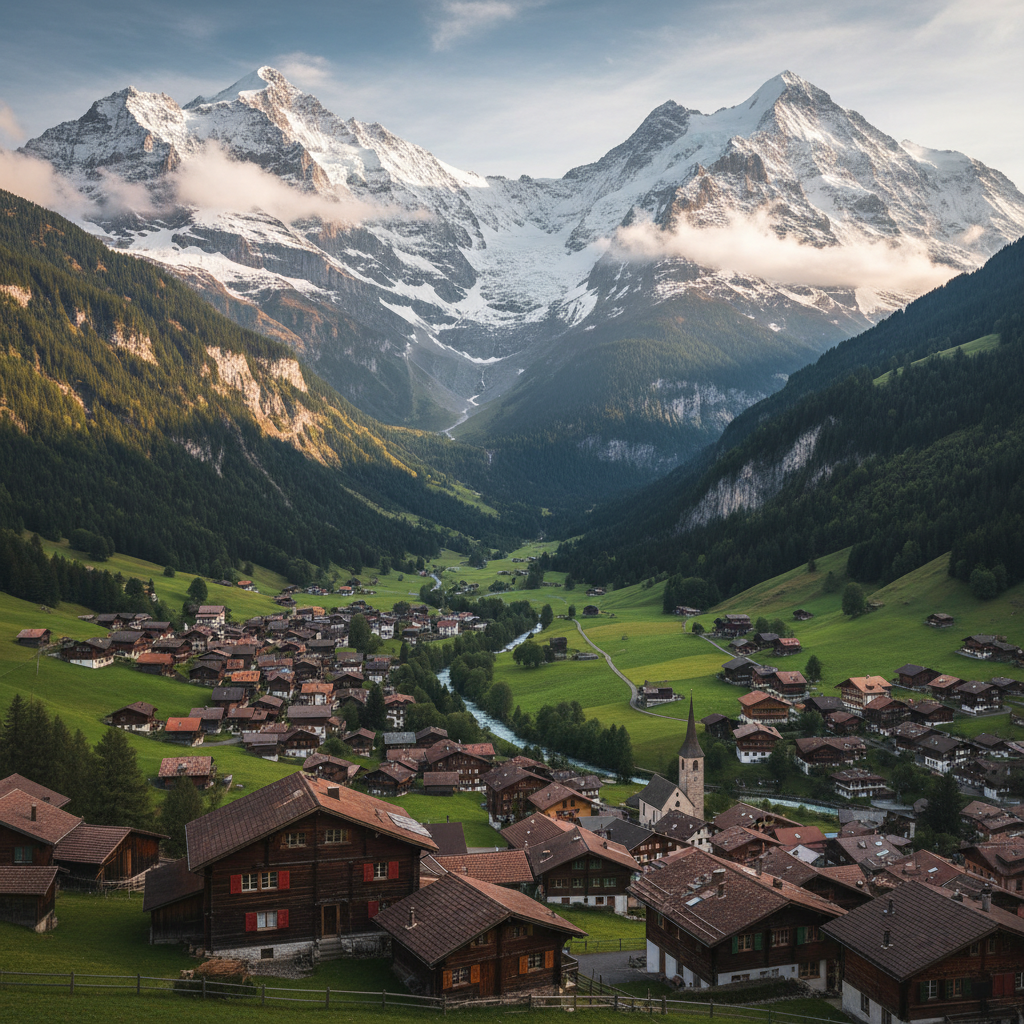 Photo by Sergio Zhukov on Pexels - The Swiss Alps offer spectacular living environments in several cantons
Money First: The Swiss Fiscal Reality
Let's start with what everyone is worried about: how much will you really earn?
Thomas and Sophie are both web developers, earning exactly CHF 100,000 gross annually. Thomas lives in Zug, Sophie in Geneva. At the end of the year, Thomas has CHF 84,800 in his pocket after taxes. Sophie? CHF 68,800. Same salary, same job, CHF 16,000 difference—enough to afford three weeks in the Maldives or a year of childcare.
This difference is not anecdotal. It represents 23% additional income simply by choosing your address wisely. But be careful, this calculation only tells part of the story.
The True Cost of Living
Let's take the complete example of our developer Thomas in Zug. Certainly, he saves CHF 16,000 on his taxes compared to Geneva. But his 3-room apartment in Zug costs him CHF 2,200 monthly compared to CHF 2,800 in Geneva. Rent savings for Geneva? Zero. In fact, Zug is even CHF 600 cheaper monthly on housing in this specific example.
The reality: low-tax cantons do not automatically have proportionally higher rents. Each canton has its own real estate dynamics influenced by local demand, building zones, and regional attractiveness (source: Office fédéral du logement).
Here is what life really costs in the main cantons for a single professional:
| Canton | Taxes (CHF 100K) | Rent 3-room/month | Health Insurance | Total Fixed Monthly |
|---|---|---|---|---|
| Zoug | CHF 1,267 | CHF 2,200 | CHF 350 | CHF 3,817 |
| Zurich | CHF 1,875 | CHF 2,500 | CHF 380 | CHF 4,755 |
| Vaud | CHF 2,483 | CHF 2,000 | CHF 420 | CHF 4,903 |
| Genève | CHF 2,600 | CHF 2,800 | CHF 480 | CHF 5,880 |
Average 2026 data, single, city center accommodation
The difference between Zug and Geneva? CHF 2,063 monthly, or CHF 24,756 per year. Now we are talking about real numbers that change a life.
Beyond Money: What Really Matters
Employment: Your Trump Card
Let's imagine you're a pharmacist. Moving to Basel-Stadt to save on taxes? Excellent idea—that's where Roche and Novartis, the two pharmaceutical giants, are located. Your salary could increase by 20% simply due to local opportunities.
On the other hand, if you are a specialist in international organizations, fleeing Geneva for Zug would probably be a strategic mistake. Geneva concentrates more than 30 international organizations and 400 NGOs—this professional network largely justifies the higher taxes if that's your field (source: Geneva Welcome Centre).
Photo by Ryan Klaus on Pexels - Geneva, international hub with unique opportunities
The Swiss job market is highly geographically concentrated. According to data from the State Secretariat for Economic Affairs, Zurich accounts for 21% of all Swiss IT jobs, Basel concentrates 40% of pharmaceutical jobs, and Geneva hosts 70% of positions in international organizations (source: SECO).
Choosing a canton without jobs in your sector is like having the best boat in a lake without water.
Language: Barrier or Opportunity?
Here's a truth that no one tells you frankly: without speaking German, about 70% of Switzerland is professionally inaccessible to you. The German-speaking cantons (Zurich, Bern, Basel, Lucerne, etc.) dominate the Swiss economy, but require at least professional German.
Claire, who is French, accepted a position in Zurich in a tech startup where "everyone speaks English". Two years later, she is professionally capped—all promotions go to German speakers who can manage Swiss clients and participate in strategic meetings in dialect.
The Swiss linguistic reality:
- Suisse romande (French): Geneva, Vaud, Neuchâtel, Jura, parts of Valais and Fribourg—about 23% of the population
- Suisse alémanique (German/dialect): Zurich, Bern, Basel, Lucerne, and 17 other cantons—about 63% of the population
- Ticino (Italian): One canton, Mediterranean atmosphere—about 8% of the population
If you speak French and are looking to avoid learning German, you will naturally focus on Suisse romande. Good news: this region includes high-performing cantons such as Vaud (EPFL, pharma) and Geneva (international, finance). Bad news: your options remain limited to 6 cantons out of 26.
Typical Profiles: Which Canton is Right for You?
The Ambitious Young Professional (25-35 years old)
Lucas, 28 years old, fullstack developer, single, wants to kickstart his career.
His calculation: Maximize professional opportunities + network + social life > short-term tax savings.
Recommended Cantons:
- Zurich - Explosive tech ecosystem, salaries CHF 95,000-120,000, constant networking
- Genève - International, multinational, global career opportunities possible
- Vaud (Lausanne) - EPFL nearby, growing startups, less expensive than Zurich
Lucas chooses Zurich. Yes, he pays CHF 22,500 in annual taxes (vs CHF 15,200 in Zug). But his professional network allows him to change jobs two years later with a 25% increase. In the long run? Zurich was the right choice.
Necessary budget: CHF 3,000-4,000/month all inclusive (rent, insurance, social life, transport)
Photo by Ryan Klaus on Pexels - Zurich combines professional opportunities and exceptional quality of life
The Settling Family (30-45 years old)
Anne and Marc, two children (5 and 8 years old), combined income CHF 180,000, are looking for stability and good schools.
Their calculation: Children's education + space + security + public services > pure tax optimization.
Recommended Cantons:
- Vaud - Excellent public schools, French, access to EPFL for the future, green spaces
- Zurich periphery (Winterthur, Uster) - Top schools, less expensive than the center, well connected
- Fribourg - Natural bilingualism for children, affordable, quiet
Anne and Marc choose Vaud, a town near Lausanne. High taxes (CHF 53,000/year for their family income), but their children will be bilingual French-English thanks to affordable international schools. EPFL in the backyard for future higher education. Vaud family allowances (CHF 300/month per child) reduce the burden a little.
Necessary budget: CHF 6,000-8,000/month for a family of 4 (4-5 room accommodation, family insurance, children's leisure activities)
The Digital Teleworker
Julien, 32 years old, works for a Parisian company in full telework, can live anywhere in Switzerland.
His calculation: Optimal taxation + living environment + internet connectivity > office proximity (does not exist).
Recommended Cantons:
- Zoug - Minimal taxes, central, excellent fiber optics, expat community
- Valais - Exceptional nature, reasonable cost of living, 300 days of sunshine/year
- Neuchâtel - Economical, magnificent lake, decent infrastructure
Julien chooses Valais, the region of Sion. Moderate taxes (CHF 26,800/year), affordable rent (CHF 1,400 for 3.5 rooms), and he can ski on weekends. With Swisscom fiber optics, his video conferences work perfectly. He saves CHF 15,000/year compared to Zurich while living facing the Alps.
Necessary budget: CHF 3,000-4,500/month
The Retiree in Search of Sweetness
Monsieur and Madame Dupont, 65 years old, combined pension CHF 6,000/month, are looking for a pleasant climate and tranquility.
Their calculation: Climate + cost of living + health services + calm > employment opportunities (retirees).
Recommended Cantons:
- Tessin (Lugano, Locarno) - Mediterranean climate, Italian sweetness, correct taxation
- Vaud (Riviera) - Montreux, Vevey, mild climate, French, excellent health network
- Valais (Bas-Valais) - Sunshine, affordable, omnipresent nature
The Duponts choose Tessin. Reasonable taxation on their pension (around CHF 14,000/year), 3.5 room apartment with lake view at CHF 1,900/month (impossible at this price in Suisse romande), and above all: 2,300 hours of sunshine per year compared to 1,700 in Genève. Their health insurance is even 10% cheaper than in Suisse romande.
Necessary budget: CHF 4,000-5,500/month (retired couple)
Underrated Cantons: The Pleasant Surprises
Fribourg: The Unrecognized Bilingual Canton
Wedged between Vaud and Bern, Fribourg often goes unnoticed. A mistake. This canton offers a unique advantage in Switzerland: a real and natural bilingualism. Your children will grow up speaking French AND German fluently—an invaluable professional asset in this country.
Average taxation (CHF 25,500 for CHF 100,000), reasonable rents (CHF 1,500 for a 3-room apartment in Fribourg city), and you are 20 minutes from Bern and 45 minutes from Lausanne. The University of Fribourg is one of the few truly bilingual universities in Switzerland (source: Unifr.ch).
Neuchâtel: Watchmaking and the Lake
If you work in watchmaking or microtechnology, Neuchâtel should be on your radar. This canton concentrates global expertise in these sectors—Breitling, TAG Heuer, and hundreds of specialized workshops.
Average-high taxation (CHF 28,000 for CHF 100,000), but rents among the most affordable in French-speaking Switzerland (CHF 1,300 for a 3-room apartment). Lake Neuchâtel offers a remarkable quality of life, with fewer tourists than Geneva or Vaud.
Valais: The Ideal Compromise?
Valais combines interesting elements: moderate taxation, reasonable cost of living, spectacular nature, and bilingualism (French in Lower Valais, German in Upper Valais). It is also one of the sunniest cantons in Switzerland.
The downside? Employment. Outside of tourism, construction, and a few company headquarters in Sion, professional opportunities remain limited. Excellent for teleworkers or retirees, more challenging for a local career.
Pitfalls to Avoid
Pitfall #1: Optimizing Only for Taxes
Mathieu moved from Lausanne to Schwyz to save CHF 12,000/year in taxes. Problem: he still works in Lausanne. His daily commute? 1h30 each way, or 3 hours of driving per day. Over a year, that's 750 hours in traffic—the equivalent of 18 weeks of full-time work.
Real cost:
- Gasoline and maintenance: CHF 450/month
- Accelerated car wear: CHF 200/month equivalent
- Time lost: incalculable, but exhausting
- Social life in Lausanne: impossible (commute)
Real savings after transport? CHF 4,200/year, not CHF 12,000. And he lost his entire social life.
The golden rule: If your commute exceeds 45 minutes, seriously recalculate whether the tax savings are really worth it.
Pitfall #2: Ignoring the Language
Sarah, an English speaker, moves to Zug for the low taxes. Eighteen months later, she is socially isolated, unable to integrate into the local community, and frustrated by administrative procedures in German.
The Swiss-German dialect (Schwyzerdütsch) is particularly formidable. Even if you speak standard German (Hochdeutsch), understanding the local dialect takes years. The Alemannic cantons are beautiful and economically dynamic, but cultural integration requires a serious linguistic investment.
Photo by PNW Production on Pexels - Social and community integration counts as much as the numbers
Pitfall #3: Neglecting Public Services
Low-tax cantons generally offer fewer public services. Zug has low taxes, but daycare centers are overpriced and places are limited. Geneva has high taxes, but offers more subsidized daycare centers, exceptional public transport, and extensive social services.
With two young children, these services can quickly offset the tax difference. A subsidized daycare place in Geneva costs CHF 900/month compared to CHF 1,800 in the private sector in Zug for the same service.
How to Make Your Decision
Step 1: Define Your Priorities (Honestly)
Take 30 minutes to rank these criteria from 1 (essential) to 5 (not important):
- Pure tax optimization
- Professional opportunities in your sector
- Quality of schools (if children)
- Cost of housing and living
- Language and cultural integration
- Climate and nature
- Proximity to the border (if a cross-border worker)
- Access to public transport
- Cultural and social life
This hierarchy usually reveals 2-3 cantons naturally suited to your situation.
Step 2: Calculate Your Real Budget
Use our salary calculator to calculate your net income in 3-4 candidate cantons. Then add:
- Realistic rent (consult Immoscout24 for real prices)
- Health insurance according to canton (Comparis)
- Transport if working in another canton
- Crèche/childcare if applicable
The "winning" canton is not always the one with the lowest taxes.
Step 3: Visit On-Site
Statistics and calculators give the numbers. The visit gives the feeling. Spend a weekend in each candidate canton:
- Walk in the neighborhoods where you could live
- Take public transport during peak hours
- Visit a supermarket (price comparison)
- Observe the people, the atmosphere, the language spoken
- If children: visit schools and playgrounds
Sophie eliminated Zug after a visit—too small, too quiet for her urban lifestyle. Her Excel statistics did not reveal this incompatibility.
Practical Aspects of Moving
Administrative Formalities
Changing cantons is surprisingly simple administratively but requires rigor in meeting deadlines.
Within 14 days of your arrival:
- Unregister from your current municipality (online form or counter)
- Register in your new municipality with: identity document, lease agreement, work permit if foreign
- Inform your employer for adaptation of tax deductions
- Change your license plates if you own a car (CHF 100-150)
All Swiss municipalities have a one-stop shop to facilitate these procedures.
Fiscal Impact of the Transition Year
Important technical point: the year you move, you will pay taxes proportionally in each canton according to the months of residence. If you move from Genève to Zoug in June, you will pay 6 months of Genève taxes and 6 months of Zoug taxes.
Strategy: move at the beginning of the year (January-March) to maximize tax savings in the first year if you leave an expensive canton for an affordable canton.
Health Insurance: Opportunity for Change
Changing cantons gives you the right to change health insurance outside the normal period. Take advantage of this to compare premiums—they vary dramatically. An adult pays CHF 280/month in the Jura compared to CHF 580/month in Genève for the same basic LAMal coverage (source: Comparis).
This difference of CHF 300/month (CHF 3,600/year) can compensate for part of the tax difference between cantons.
The Special Case of Cross-Border Commuters
If you work in Switzerland but are considering living in neighboring France (Annemasse, Saint-Julien, Ferney-Voltaire), the calculation changes completely.
The Cross-Border Commuter Equation
France Advantages:
- Rent 40-50% cheaper (house with garden at €1,400 vs apartment CHF 2,800 in Genève)
- Food and gasoline cheaper (approximately 30% savings)
- Larger living space for the same budget
France Constraints:
- 1-2h daily commute (traffic jams almost guaranteed)
- Cost of gasoline + Genève parking (CHF 350-400/month)
- Double taxation France-Switzerland (tax agreement, but complex)
- Quality of life impacted by travel time
According to a study by the Canton de Genève, 40% of cross-border commuters living in France live more than 15 km from the border—which generates daily commutes of at least 1h30 each (source: Canton de Genève).
Our recommendation: Viable if you are disciplined about telecommuting (3 days/week in the office maximum) or if your family situation values space (young children). Less recommended if you value your free time and Swiss social life.
Cantons in the Spotlight: Our Top 5
🥇 Zurich: The Economic Hub
For whom: Ambitious professionals, singles or couples without children, English speakers willing to learn German.
The Swiss economic giant. One in five IT jobs in Switzerland is in Zurich. Finance, tech, pharma, consulting—everything is concentrated there. Salaries are 10-15% higher than the national average to compensate for the cost of living.
Realistic figures:
- Average salary: CHF 95,000/year
- Taxes (CHF 100K): CHF 22,500 (22.5%)
- 3-room apartment rent in the center: CHF 2,500/month
- Health insurance: CHF 380/month
- Unemployment rate: 2.3% (excellent)
The verdict: If your career is your #1 priority and you speak English + German (or want to learn), Zurich is unbeatable.
🥈 Vaud: French-Speaking Excellence
For whom: French-speaking families, pharma/tech professionals, students (EPFL/UNIL).
The benchmark in French-speaking Switzerland. Lausanne combines a dynamic tech ecosystem (startups, EPFL), a strong pharmaceutical industry (Nespresso in Vevey, biotech in Epalinges), and a remarkable quality of life between the lake and vineyards.
Realistic figures:
- Average salary: CHF 85,000/year
- Taxes (CHF 100K): CHF 29,800 (29.8%)
- 3-room apartment rent in Lausanne: CHF 2,000/month
- Health insurance: CHF 420/month
- Unemployment rate: 3.8%
The verdict: Best French-speaking canton for work-life-education balance. High taxes finance excellent public services.
🥉 Zug: Fiscal Optimization
For whom: High earners (CHF 120K+), finance/crypto professionals, German or English speakers.
The Swiss tax champion. Zug attracts international companies (especially crypto and trading) thanks to its ultra-competitive taxation. The canton of 130,000 inhabitants is home to more than 30,000 companies—the highest ratio of companies to inhabitants in Switzerland.
Realistic figures:
- Average salary: CHF 110,000/year (finance sector)
- Taxes (CHF 100K): CHF 15,200 (15.2%)
- 3-room apartment rent in the center: CHF 2,200/month
- Health insurance: CHF 350/month
- Unemployment rate: 1.8% (the lowest)
The verdict: For high earners, Zug is mathematically unbeatable. But it's a small canton—if you're looking for an intense cultural life or professional diversity, this isn't it.
Genève: The International
For whom: NGO/international careers, multilinguals, accepting high taxes for unique opportunities.
The most international city in Switzerland. UN, WHO, ICRC, WTO, and 400 NGOs make Geneva a unique global hub. If your CV says "international organization experience," it's worth its weight in gold professionally.
Realistic figures:
- Average salary: CHF 95,000/year
- Taxes (CHF 100K): CHF 31,200 (31.2%)
- 3-room apartment rent in the center: CHF 2,800/month
- Health insurance: CHF 480/month
- Unemployment rate: 4.1%
The verdict: Expensive, very expensive. But if you're building an international career, the investment may be worth every franc spent. Genève opens doors that Zug cannot offer.
Bâle-Ville: The Pharma Capital
For whom: Scientists, pharmacists, researchers, German speakers.
Basel = pharmaceutical. Roche and Novartis employ more than 20,000 people in the canton. If you have a PhD in chemistry or biology, Basel offers you opportunities that no other canton can match (source: Basel Area).
Realistic figures:
- Average pharma salary: CHF 100,000-130,000/year
- Taxes (CHF 100K): CHF 24,100 (24.1%)
- 3-room apartment rent in the center: CHF 2,100/month
- Health insurance: CHF 390/month
- Unemployment rate: 3.1%
The verdict: If pharma/biotech is your field, forget the other cantons. Basel is your destination.
The Decision in Three Questions
Before finalizing your choice, answer these three questions honestly:
1. In five years, where do you want to be professionally? If your answer involves rapid progression, an international network, or frequent career changes, prioritize the major centers (Zurich, Geneva, Basel, Lausanne) even with higher taxes. If your answer is "stability and quality of life", the medium-sized cantons become very attractive.
2. Where does your social life take place? If all your friends and colleagues are in Lausanne, living in Fribourg to save CHF 300/month will cost you more in gas and lost time. Social life has a real economic value that we forget in Excel spreadsheets.
3. How long are you going to stay in Switzerland? 2-year contract? Choose ease and practicality. Permanent installation? Optimize for the long term, even if it requires integration efforts (learning German, adapting culturally).
Concrete Next Steps
Now that you have identified 2-3 candidate cantons, here's how to finalize your decision.
This Week
Calculate your exact net salary in each candidate canton with our salary calculator. Include your precise family situation, your children, your marital status—these details change the figures significantly.
Then, search for actual rents on Immoscout24 and Homegate to get accurate prices, not theoretical averages.
This Month
Plan a weekend visit to each candidate canton. Airbnb or small hotel, and spend two days living like a local. Take the tram at rush hour, eat in neighborhood restaurants, observe people in the parks. Your intuition will often tell you more than statistics.
If you have children, absolutely visit one or two schools. The websites are nice, but seeing the real infrastructure and talking to local parents is worth a thousand brochures.
In Three Months
Once your decision is made, anticipate the administrative procedures. Contact the municipality of destination to understand their precise requirements—some municipalities are stricter on the required documents than others.
If you are also changing jobs, negotiate your start date to coincide with your move. Starting a new job AND moving at the same time is stressful but avoids the complications of temporary double residence.
Key Points to Remember
Choosing your Swiss canton is a decision too important to be based solely on a tax calculator. Here's what really matters: Firstly, calculate the overall cost of living (taxes + rent + transport + insurance), not just isolated taxes—the real difference between cantons is often half of what you imagine. Secondly, prioritize your employment sector and professional opportunities—a 15% higher salary in Zurich more than compensates for higher taxes. Thirdly, consider your social and linguistic integration—being unhappy in a canton that is "optimal" fiscally is not worth the savings.
Most expatriates who change cantons after 2-3 years did so by optimizing only for money, ignoring quality of life, social integration, and professional opportunities. Learn from their mistakes.
Official Resources
- CH.ch - Official portal of the cantons - Comprehensive information on the 26 cantons with official data
- Federal Statistical Office - Cantonal Comparison - Detailed statistics on population, employment, income by canton
- Official tax comparator - Official tool of the Federal Tax Administration
- Comparis - Cantons comparison - Independent comparator of cost of living and taxes
- Canton de Genève - Official website - Example of a cantonal site with all the practical information
- Canton de Vaud - Official website - Comprehensive information on Vaud and its municipalities
- Canton de Zurich - Official website - Official Zurich portal in several languages
- Immoscout24 Suisse - Real market prices for real estate by canton and municipality
Related Articles
Gross-Net Salary Calculator by Canton Instantly calculate your exact net salary in any Swiss canton. Our tool includes all taxes, AHV/BVG contributions, and deductions specific to your family situation.
Tax Comparator of the 26 Cantons Visualize on an interactive map which canton offers you the best net salary. Compare tax differences in real-time with your current salary.
Guide to Taxes in Switzerland Understand the three-level Swiss tax system (federal, cantonal, communal), possible deductions, and how to legally optimize your tax burden.
Guide to Insurance in Switzerland Mandatory LAMal health insurance, premiums that vary by canton, and how to choose the best coverage for your situation.
Checklist for Cross-Border Workers Geneva-Vaud If you are considering working in French-speaking Switzerland as a cross-border worker, this guide details all the steps, tax implications, and practical aspects to consider.

Share This Article
📖 ShareThis Integration Guide
About ShareThis Inline Share Buttons
Inline Share Buttons can be seamlessly positioned at the top/bottom of your articles or next to products you're selling for easy sharing. Connect your site to the rest of the world by enabling visitors to share your content across 40+ social channels.
Installation Steps
Step 1: Add ShareThis Script to Your Site
Place ShareThis Script inside your website's <head></head> section. This code powers all ShareThis Apps and only needs to be added once per page.
<script type='text/javascript' src='https://platform-api.sharethis.com/js/sharethis.js#property=69624e147512c045298580c6&product=sop' async='async'></script>Step 2: Enable the App
Click Enable App in your ShareThis dashboard to turn this app on for your website. It will only work on pages where the ShareThis script has been added in Step 1.
Step 3: Add the Placement Tag
Add this placement tag wherever you want your share buttons to appear:
<!-- ShareThis BEGIN -->
<div class="sharethis-inline-share-buttons"></div>
<!-- ShareThis END -->
Customization Options
- Smart Share Buttons: ShareThis will automatically select which share buttons to show based on users' preferences
- Alignment: Choose from Left, Right, Center, or Justified
- Color Themes: Social, White, Black, Gray, or Custom colors
- Sizes: Large, Medium, or Small buttons
- Labels: Call to Action, Share Counts, or None
- Corners: Square or Round button shapes
- Languages: Multiple language support available
⚠️ Important Notes
- The ShareThis script must be loaded in the page head for buttons to work
- You can customize button appearance in your ShareThis dashboard
- Enable the app in your dashboard after adding the script
- Share counts require a minimum threshold (default: 10 shares)
Need Help?
Visit the ShareThis Support Center for detailed documentation and troubleshooting guides.
Calculate Your Exact Swiss Salary
Want to know exactly what you'll take home after taxes and social contributions? Our calculator accounts for your canton, family situation, and all deductions.
Try Our Salary Calculator